OFFICIAL SITE OF THE
FEDERAL PROSPECTS HOCKEY LEAGUE
SINGLE A MINOR PROFESSIONAL HOCKEY
 FPHL opens in new window
 opens in new window
 opens in new window
 opens in new window
 opens in new window
 opens in new window
 opens in new window
 opens in new window
 opens in new window
 opens in new window
 opens in new window
 opens in new window
 opens in new window
 opens in new window
 opens in new window
 opens in new window
 opens in new window
 opens in new window
Three teams from each division will qualify, creating 12 postseason berths and a championship path built around four division races, two conference championships and one Commissioner’s Cup
BINGHAMTON, NY – Twelve teams. Four divisions. Two conferences. One championship.
Unveiling the postseason path for the 2026-27 Federal Prospects Hockey League season.
As our league expands to 17 teams, our playoff field is expanding with it. The top three teams in each of our four divisions will qualify for the postseason, creating 12 total playoff berths. That gives more teams and players the opportunity to compete for the Commissioner’s Cup – and more fan bases the opportunity to experience postseason hockey.
The same qualification standard will apply in every division:
Every approved regular-season game will count equally toward each team’s position in its division standings under the 2-1-0 system.
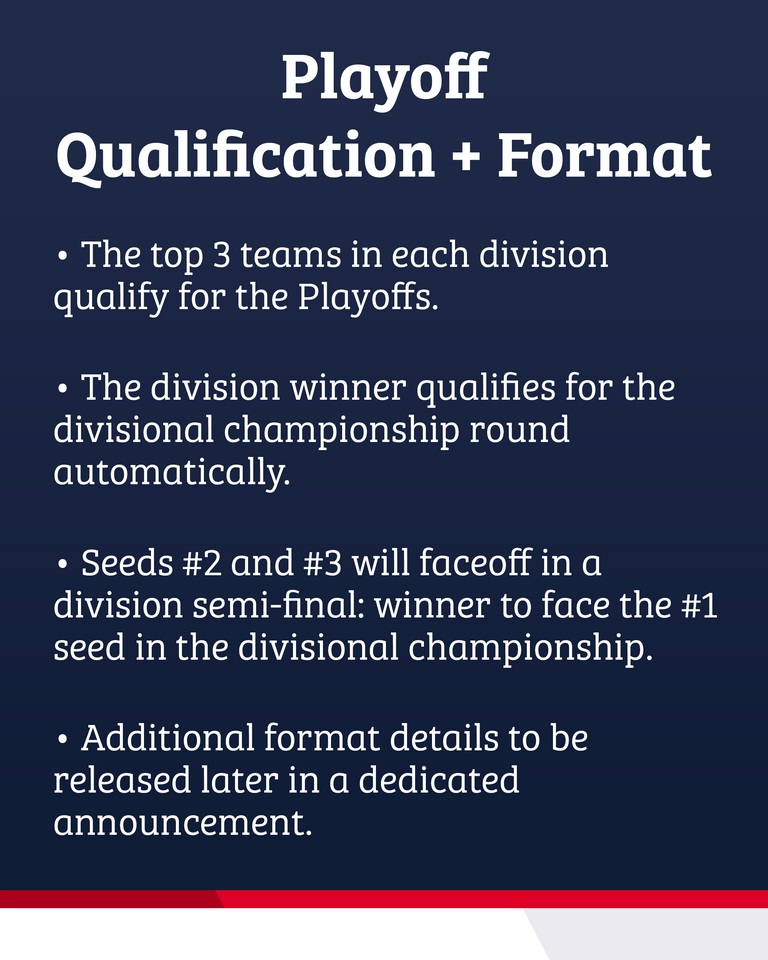
The new format is designed to create more playoff hockey while preserving a meaningful reward for regular-season success. Finishing first in a division provides a direct path to the Division Championship Round, while the second- and third-place teams must earn the opportunity to advance.
“The excitement and anticipation for October is off the charts,” said Herm Sorcher, president and partner of the Danbury Hat Tricks. “When we looked at what was important to our fan bases, it was playoff hockey and the chance to be in it to win it. Our goal was to create the path and the kind of storylines that translate into nonstop conversation across the hockey community. Putting 12 teams into the playoffs is going to be a powder keg of enthusiasm – must-see hockey.”
More Teams in the Race – Without Diminishing the Regular Season
One of the clearest concerns raised during our playoff discussions was that a growing league should create more postseason opportunity.
We agreed.
Expanding to 17 teams without expanding the playoff field would have made postseason access more restrictive at the same time that new teams, markets and fan bases were entering the league. Moving to 12 qualifiers gives three teams from every division a defined path into the postseason and allows more markets to experience playoff hockey.
At the same time, the regular season must continue to matter.
That is why the division winner receives an important competitive advantage: the No. 1 seed bypasses the Divisional Opening Round and advances directly to the Division Championship Round with home-ice advantage.
The No. 2 and No. 3 seeds still qualify for the postseason, but they must compete for the right to challenge the division winner.
The result is a format that rewards finishing first, makes positioning throughout the top three meaningful and gives more teams a reason to remain fully invested in the race.
“Including more teams in the playoff picture makes for an exciting and competitive league,” said Jerome Bechard, head coach of the Columbus River Dragons. “You grind all year to jockey for playoff position, but when you get the chance to compete in the playoffs, there is nothing better. You get a fresh start. It is not where you begin – it is how you finish. Once you get in, anything can happen after that.”
The Road to the Commissioner’s Cup
The postseason will move through four competitive stages.
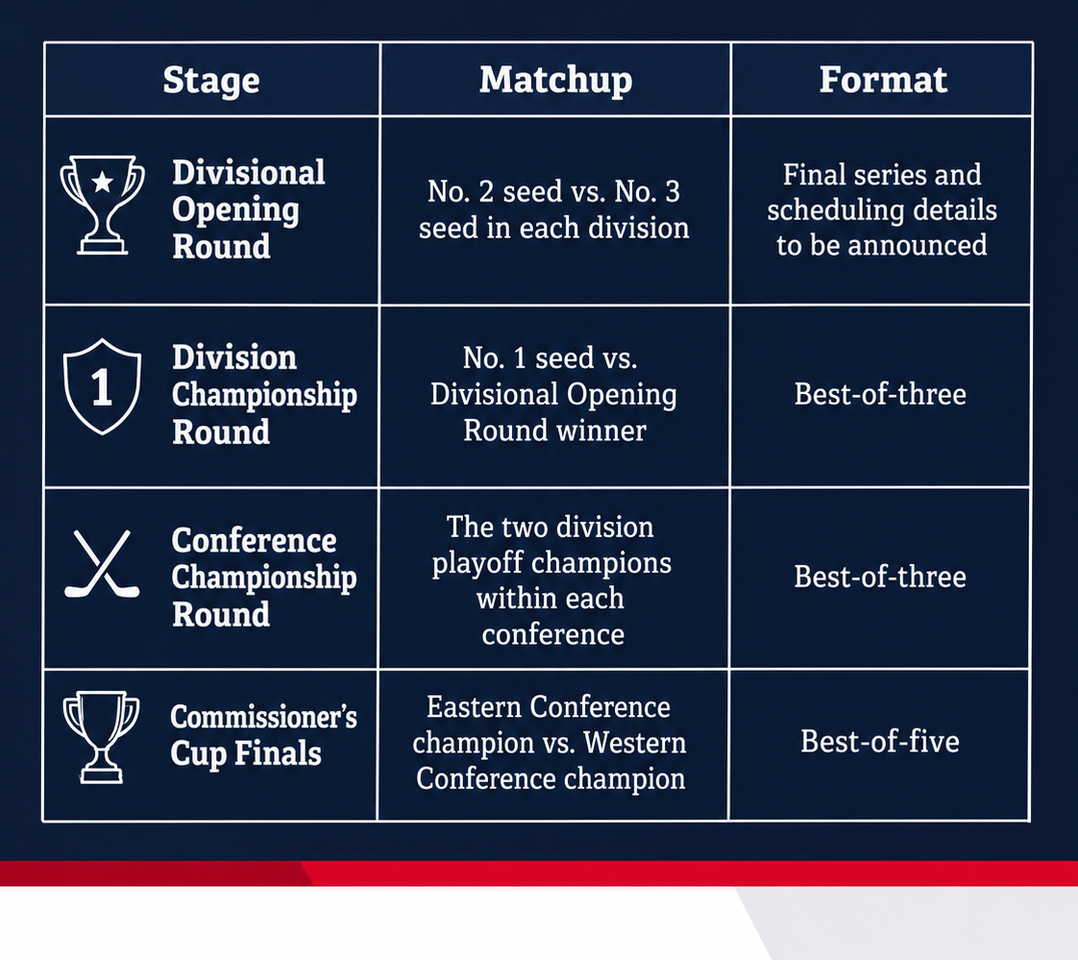
In each best-of-three Division Championship Round, the No. 1 seed will hold home-ice advantage and have the opportunity to host up to two games.
The two division playoff champions within each conference will then meet in a best-of-three Conference Championship Round. The higher-seeded team will hold home-ice advantage and have the opportunity to host up to two games.
The Eastern and Western Conference champions will meet in the best-of-five Commissioner’s Cup Finals. Under the standard site structure, the lower-seeded team is scheduled to host Games 1 and 2, followed by Games 3, 4 and 5, as necessary, at the higher-seeded team. This places every potential deciding game at the higher seed.
For cross-division and cross-conference matchups, home-ice priority will be determined using the league’s approved regular-season standings and tiebreaker rules.
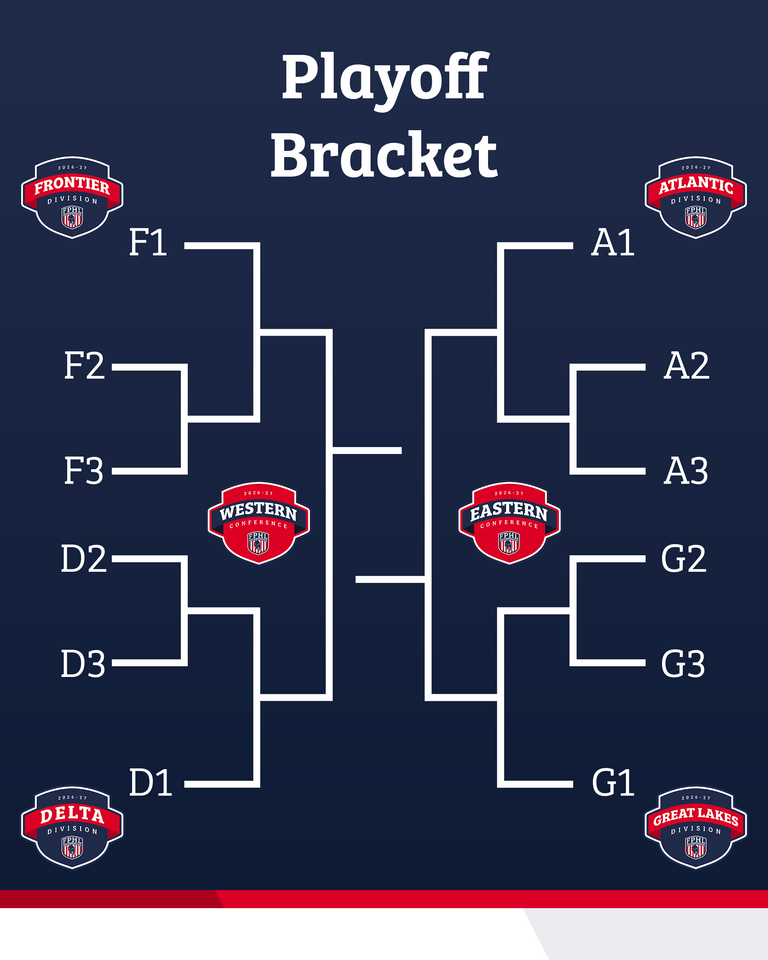
Four division races will therefore produce four division playoff champions. Those four teams become two conference champions – and those two teams meet for one Commissioner’s Cup.
Finalizing the Divisional Opening Round
The No. 2 and No. 3 seeds will meet in a Divisional Opening Round, with the winner advancing to face the division’s No. 1 seed.
We are finalizing the round’s detailed format, hosting plan and schedule in coordination with our teams and host arenas so it is fair, operationally practical and supported by confirmed ice availability.
We will announce those details in a dedicated update once venue coordination is complete. This remaining work does not affect the qualification standard or championship path announced today.
Built Through Leaguewide Review
The postseason structure was not developed as an isolated decision.
Lessons from previous postseasons, the expansion of our league, arena availability, competitive fairness, travel, geography and the fan experience were all considered together.
Following our league meeting, we assembled a playoff working group with team representation from across the FPHL. That group evaluated multiple options and considered how each would affect:
Those discussions helped shape the four-division alignment that our teams accepted unanimously and gave us a clearer geographic and competitive framework from which to build the playoff path.
Our objective was not simply to place more teams in a bracket. It was to create a postseason that is exciting for fans, realistic for teams and understandable from the first game of the regular season through the final game of the Commissioner’s Cup Finals.
A Collaborative Plan for California Playoff Travel
Our western expansion creates unique postseason travel considerations, particularly when California and non-California teams meet. For the first season of our expanded western footprint, our California clubs, teams from across the league, the playoff working group and the League Office developed a collaborative framework designed to protect the home playoff opportunities earned on the ice while managing the added costs of long-distance travel responsibly.
Our expectation is that California teams that earn home playoff dates will host those games, giving their fans the opportunity to experience postseason hockey in their home markets. Within that approved framework, matchup-specific travel and scheduling arrangements will be finalized by the participating clubs and the League Office once pairings are known, with competitive integrity, practical travel, responsible cost management and the fan experience guiding each decision.
Tighter Standings. Bigger Stakes.
Yesterday, we introduced our new 2-1-0 standings system, designed to keep division races closer and more teams within reach for a longer portion of the season.
Today’s playoff announcement completes the next part of that competitive picture.
With three teams qualifying from each division, every movement in the standings matters:
The combination of tighter standings and an expanded playoff field should create more consequential games, more scoreboard watching and more opportunities for teams to build momentum at the right time.
There will be new matchups, new rivalries, unexpected runs and teams that enter the postseason believing they can change their story.
That is what playoff hockey should create.
What Comes Next
Tomorrow, our 2026-27 season rollout reaches its next major milestone.
Friday, July 24 at 12:00 PM Eastern Time: We will release the complete 2026-27 regular-season schedule for all 17 teams.
Additional operational details for the Divisional Opening Round will be announced once final arena coordination is complete.
We encourage fans to follow @TheFPHL and the official social channels of all 17 teams as the complete road to the Commissioner’s Cup continues to take shape. We will be following the conversation across social media and look forward to hearing your thoughts.
Twelve teams will enter the postseason. Which one will finish the journey?
For more information, visit federalhockey.com and follow us at @TheFPHL.
About the FPHL
The Federal Prospects Hockey League is a professional single-A minor hockey league with member clubs across the United States. The FPHL is committed to growing the game, developing players and supporting professional hockey in passionate local communities. The league will be entering its 17th season in 2026-27.

